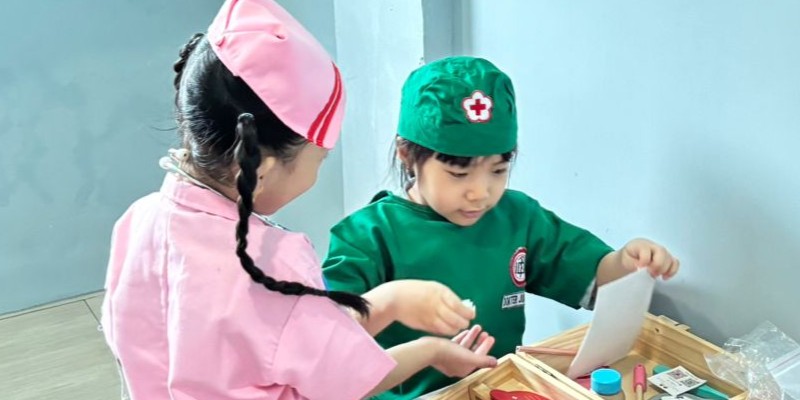
Pretend play, also known as imaginative or dramatic play, is a natural and essential part of early childhood. For kindergarten students, it is more than just fun—it is a powerful way to learn, explore, and understand the world around them.
Whether children are pretending to be doctors, teachers, shopkeepers, or superheroes, they are actively developing important life skills through play.
What Is Pretend Play?
Pretend play involves children using their imagination to create scenarios, roles, and stories. This can include:
- Role-playing different professions (doctor, chef, firefighter)
- Acting out everyday situations (going to the market, cooking, caring for a baby)
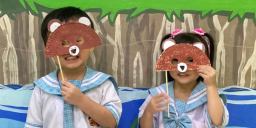
- Creating fantasy worlds with costumes and props
These activities allow children to step into different roles and experience perspectives beyond their own.
Developing Social and Emotional Skills
One of the most important benefits of pretend play is the development of social and emotional skills. As children interact with peers, they learn to:
- Share and take turns
- Cooperate and negotiate roles
- Understand and express emotions
- Build empathy by seeing things from others’ perspectives
For example, when a child pretends to be a parent or a doctor, they begin to understand care, responsibility, and compassion.
Boosting Language and Communication
Pretend play encourages children to use language in meaningful ways. During role-play, they naturally:
- Practice new vocabulary
- Form sentences and express ideas
- Engage in conversations with peers
This helps strengthen both verbal communication and listening skills, which are essential for future academic success.
Enhancing Creativity and Imagination
Imaginative play allows children to think beyond reality. A simple box can become a car, a spaceship, or a house. Through this process, children:
- Develop creative thinking
- Learn to solve problems
- Explore different possibilities and outcomes
Creativity nurtured in early childhood supports innovation and flexible thinking later in life.
Supporting Cognitive Development
Pretend play also contributes to cognitive growth. Children learn to:
- Plan and organize their ideas
- Follow sequences of events
- Make decisions within their play scenarios
For instance, setting up a “restaurant” requires children to think about roles, menus, and interactions—building early planning and reasoning skills.
Encouraging Independence and Confidence
When children lead their own play, they gain a sense of control and independence. They make choices, take initiative, and express their ideas freely.
This builds:
- Self-confidence
- Decision-making skills
- A sense of responsibility
Children feel proud of their ideas and creations, which strengthens their self-esteem.
The Role of Teachers and Environment
Teachers play an important role in supporting pretend play by providing:
- Safe and engaging play spaces
- Props such as costumes, kitchen sets, or puppets
- Gentle guidance without controlling the play
A well-prepared environment encourages children to explore freely while still feeling supported.
Conclusion
Pretend play is a vital part of kindergarten learning. Through imagination and role-play, children develop social, emotional, language, and cognitive skills in a natural and enjoyable way.
By encouraging pretend play, we are not only allowing children to have fun—we are helping them build essential skills that will support their growth, learning, and success in the future.