Discipline in early childhood is often misunderstood as punishment or strict control. In reality, discipline is about teaching children self-control, responsibility, and appropriate behavior. When introduced in a positive and consistent way, discipline becomes a powerful tool to help young children grow into confident, respectful, and independent individuals.
Why Discipline Matters in Early Years
The early years of a child’s life are a critical period for emotional, social, and cognitive development. During this stage, children begin to understand boundaries, routines, and expectations. Teaching discipline early helps children:
* Develop self-regulation and emotional control
* Understand right from wrong
* Build respect for others
* Feel safe and secure through consistent routines
Children thrive when they know what is expected of them. Clear and consistent discipline provides a sense of structure that helps them navigate their world with confidence.
Positive Discipline vs. Punishment
It is important to distinguish between discipline and punishment. Punishment focuses on consequences for wrongdoing, while discipline focuses on teaching and guiding behavior.
Positive discipline strategies include:
* Setting clear expectations: Use simple and age-appropriate language to explain rules.
* Consistency: Apply rules fairly and consistently so children understand boundaries.
* Modeling behavior: Children learn by observing adults. Demonstrate the behavior you want to see.
* Encouragement and praise: Acknowledge positive behavior to reinforce good habits.
* Redirecting behavior: Gently guide children toward more appropriate actions when they make mistakes.
By focusing on teaching rather than punishing, children are more likely to internalize positive behaviors.
The Role of Routine and Structure
Young children feel more secure when they have predictable routines. Daily schedules for meals, playtime, and sleep help children understand what comes next and reduce anxiety or challenging behavior.
For example, consistent routines such as tidying up toys after play or washing hands before meals teach responsibility and independence. Over time, these small habits become part of the child’s natural behavior.
Encouraging Independence Through Discipline
Discipline is closely connected to independence. When children are given opportunities to make choices and take responsibility, they develop confidence in their abilities.
Simple practices include:
* Allowing children to choose between two options
* Encouraging them to complete small tasks independently
* Teaching them to solve simple problems
These experiences help children understand accountability and build decision-making skills from an early age.
Handling Challenging Behavior
It is normal for young children to test limits as they learn about the world. Instead of reacting with frustration, adults can use these moments as teaching opportunities.
Effective approaches include:
* Staying calm and patient
* Acknowledging the child’s feelings
* Explaining why a behavior is not acceptable
* Offering alternatives or solutions
For example, if a child grabs a toy, guide them to ask for a turn instead. This helps them learn social skills and empathy.
Partnering with Parents
Consistency between home and school is essential in teaching discipline. When parents and educators work together, children receive clear and unified messages about expectations and behavior.
Regular communication, sharing strategies, and aligning approaches ensure that children experience a supportive and consistent environment in both settings.
Our Approach to Discipline
At our school, we believe that discipline is not about control, but about guidance and growth. We focus on nurturing each child’s character through positive reinforcement, structured routines, and respectful communication.
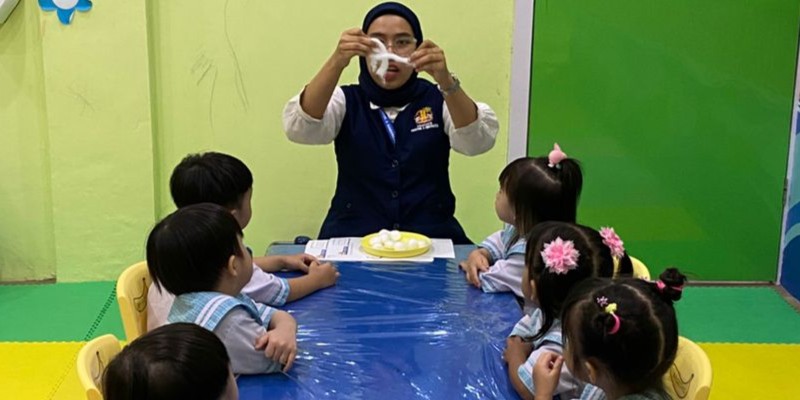
Our teachers create a safe and supportive environment where children feel valued and understood. Through daily interactions, we guide children to develop self-discipline, empathy, and responsibility—skills that will benefit them throughout their lives.
Conclusion
Teaching discipline in early childhood is an investment in a child’s future. By using positive, consistent, and supportive approaches, we help children build strong foundations for lifelong success.
When children learn discipline in a nurturing environment, they do not just follow rules—they understand them, respect them, and carry these values into every stage of their development.