Many parents notice that children around the age of four seem to have endless energy. They run, jump, climb, talk, and move constantly throughout the day. This level of activity can sometimes feel overwhelming for adults, but in reality, it is a very normal and healthy part of child development.
At this stage, children are experiencing rapid physical, cognitive, and emotional growth. Their active behavior is often a reflection of their curiosity, learning process, and developing abilities.
Rapid Physical Development
Around the age of four, children’s gross motor skills develop significantly. They become better at running, jumping, climbing, and balancing. As their physical abilities improve, they naturally want to practice these new skills as much as possible.
Movement helps strengthen their muscles, coordination, and body control. What may appear as constant activity is actually an important part of their physical development.
High Natural Energy Levels
Young children naturally have more energy than adults. Their bodies are built for movement, and they have not yet developed the ability to sit still for long periods.
Because of this, active play is essential for them to release energy in healthy ways. When children are given enough opportunities to move, they are often better able to focus during calmer activities afterward.
Learning Through Movement
For preschool-aged children, learning often happens through action and exploration. When children move, build, climb, or play games, they are developing important skills such as:
-
Coordination and balance
-
Spatial awareness
-
Problem-solving abilities
-
Confidence in using their bodies
Active play allows children to explore their environment and understand how things work.
Growing Curiosity About the World
Four-year-olds are naturally curious. They want to explore, ask questions, and try new experiences. This curiosity often leads them to move from one activity to another quickly.
Through exploration, children learn about their surroundings, develop creativity, and strengthen their thinking skills.
Developing Self-Regulation
At age four, the part of the brain responsible for self-control and impulse regulation is still developing. This means children may find it difficult to stay still or wait for long periods.
With time, guidance, and supportive routines, children gradually develop the ability to manage their energy and focus for longer periods.
Supporting Active Children
Instead of trying to reduce children’s natural activity, it is more helpful to guide it in positive ways. Adults can support children by providing:
-
Daily opportunities for outdoor play
-
Activities that include movement and exploration
-
Structured routines that balance active and quiet times
-
Creative play experiences that stimulate imagination
When children are given the chance to move and explore freely, their energy becomes a powerful tool for learning and development.
How Our School Supports Active Learners
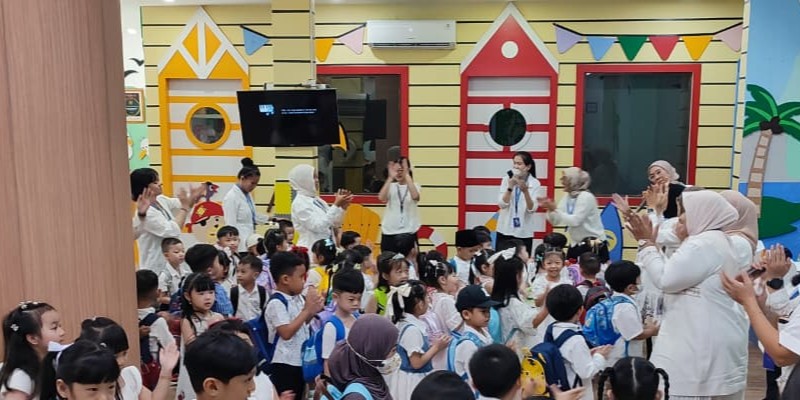
At our school, we understand that being active is a natural and important part of a four-year-old’s development. Rather than expecting children to sit still for long periods, we design learning experiences that allow them to move, explore, and stay engaged.
Our classroom routines include a balance of structured learning, creative activities, and movement-based play. Children participate in hands-on learning, outdoor activities, and interactive lessons that support both their physical and cognitive development.
Our teachers also guide children in gradually developing self-regulation through consistent routines, positive encouragement, and age-appropriate expectations.
By providing an environment that respects children's natural energy, we help them grow into confident learners who are curious, active, and ready to explore the world around them.
When children’s energy is supported in the right way, it becomes a powerful part of their learning journey.